






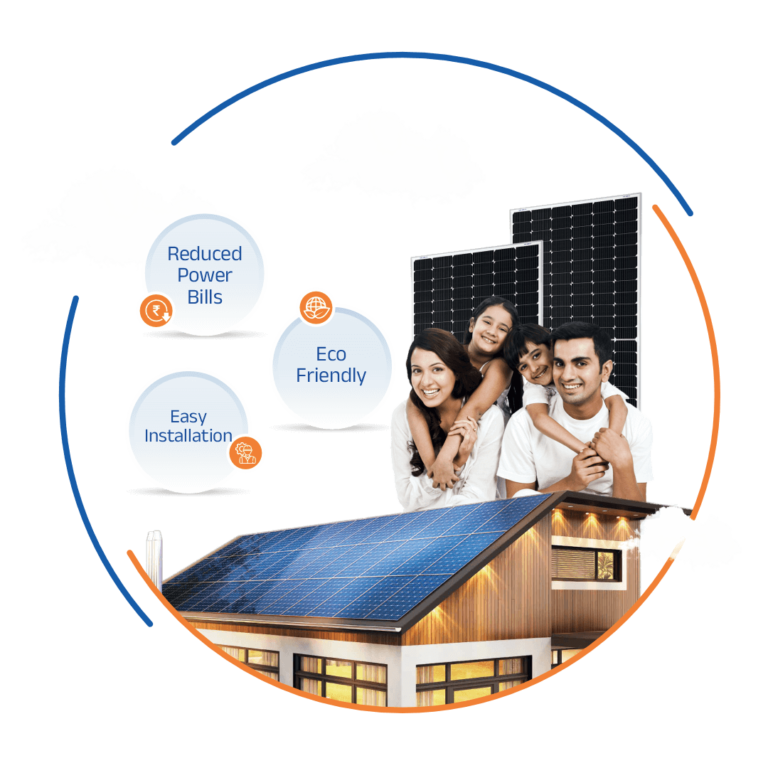

Save Energy, Safe Tomorrow

SOLARGRAM is a trusted solar energy solutions brand committed to delivering clean, reliable, and cost-effective solar power solutions for residential, commercial, and industrial customers. We serve a wide range of establishments, including homes, businesses, industries, schools, hospitals, and commercial facilities.
We specialize in On-Grid, Off-Grid, and Hybrid Solar Systems, providing comprehensive end-to-end solar EPC services, from system design, engineering, and procurement to installation, maintenance, and technical support.
At SOLARGRAM, we combine advanced solar technology, quality components, expert engineering, and customer-focused service to deliver efficient, durable, and performance-oriented solar energy systems tailored to individual requirements.
Our commitment to quality, transparent consultation, reliable service, and long-term system performance helps customers reduce electricity bills, maximize solar power generation, and move towards greater energy independence.
We believe solar energy is more than an alternative source of electricity — it is an investment in a cleaner, greener, and more sustainable future.
The SOLARGRAM Promise
We are committed to delivering dependable solar solutions with a strong focus on performance, quality, and customer satisfaction.
SOLARGRAM – Generate Your Green Energy.
Powering a Greener Tomorrow with Clean & Sustainable Energy.


Our Achievement

2.75+
mW Solar Projects
42+
Cities Presence
Pan India
90%
Energy Saving
86
Our Partner
Why SOLARGRAM


Missions of SOLARGRAM
We are working to bring sustainable energy for all across the country.
Scalability:
Environmental Benefits:
Cost Effective:
Energy Independence:

Values and Core Commitment

QUALITY FOCUS
At Portxport, we take our quality extremely seriously.

CUSTOMER CENTRICITY
If the customer is happy, we are happy!

INTEGRITY
At Portxport honesty comes first. No ifs - no buts about integrity.

SUSTAINABILITY
We haven’t inherited the world from our ancestors, we have borrowed it from our future generations. And we can’t afford to take this liability lightly and thus all things and Portxport are climate conscious.

INNOVATION
We are deep believers in technology and innovation and hence strive to be on the cutting edge of it and that reflects in our products.



Associated Partners






Frequently Asked Questions
On-Grid systems are connected to DISCOM, Off-Grid systems use batteries, and Hybrid systems combine both grid and battery backup.
Electricity generation depends on system size, location, sunlight availability, and roof orientation.
A properly designed solar system can reduce electricity bills by 80% to 95%.
Installation usually takes 1–4 days after site survey and design approval.
Yes, SolarGram provides complete assistance for net metering, including documentation and DISCOM approvals.
Net metering allows excess solar electricity to be exported to the grid, earning energy credits that reduce your bill.
Yes, government subsidies are available for eligible residential rooftop solar systems as per current MNRE guidelines.
Solar panels typically last 25–30 years with performance warranties.
Solar panels come with long-term performance warranties, while inverters and other components have manufacturer warranties.
Yes, solar panels generate electricity during cloudy weather, though output may be reduced.
Yes, solar systems are suitable for residential, commercial, and industrial applications.
SolarGram offers quality components, expert engineering, transparent pricing, complete approvals support, and reliable after-sales service.
Yes, SolarGram offers one-time maintenance, Annual Maintenance Contracts (AMC), and post-installation support.

The Arachis genus, which is native to South America, particularly the regions east of the Andes such as Peru, Bolivia, Argentina, and Brazil, encompasses various wild species of peanuts. The cultivated peanuts we know today (Arachis hypogaea) are believed to have originated from a crossbreeding event between two of these wild species, namely A. duranensis and A. ipaensis. Initially, this hybridization resulted in sterile plants, but their fertility was restored through natural chromosome doubling, leading to the development of what is known as an amphidiploid or allotetraploid plant. A wild peanut variant called A. monticola, found in specific areas of northwestern Argentina or southeastern Bolivia, may have emerged from this crossbreeding process. Over time, through selective breeding, A. hypogaea was domesticated and became the cultivated peanut we rely on today.